
Paramount did not sell A Christmas Carol this month. It sold a rehabilitation, and the money shows exactly which one the studio believed in.
Ebenezer opens Friday with a reported $38 million production budget and roughly $50 million more behind it in marketing. Johnny Depp, the man the whole thing is built around, took $5 million for the lead, with bonuses tied to how the weekend goes. Variety’s Rebecca Rubin called that fee “a fraction of what he’s earned on prior studio movies,” and she is not exaggerating: Depp made more than $250 million across the Pirates of the Caribbean films alone. A studio spending more to announce a comeback than to pay its own star tells you exactly where its priorities sit.
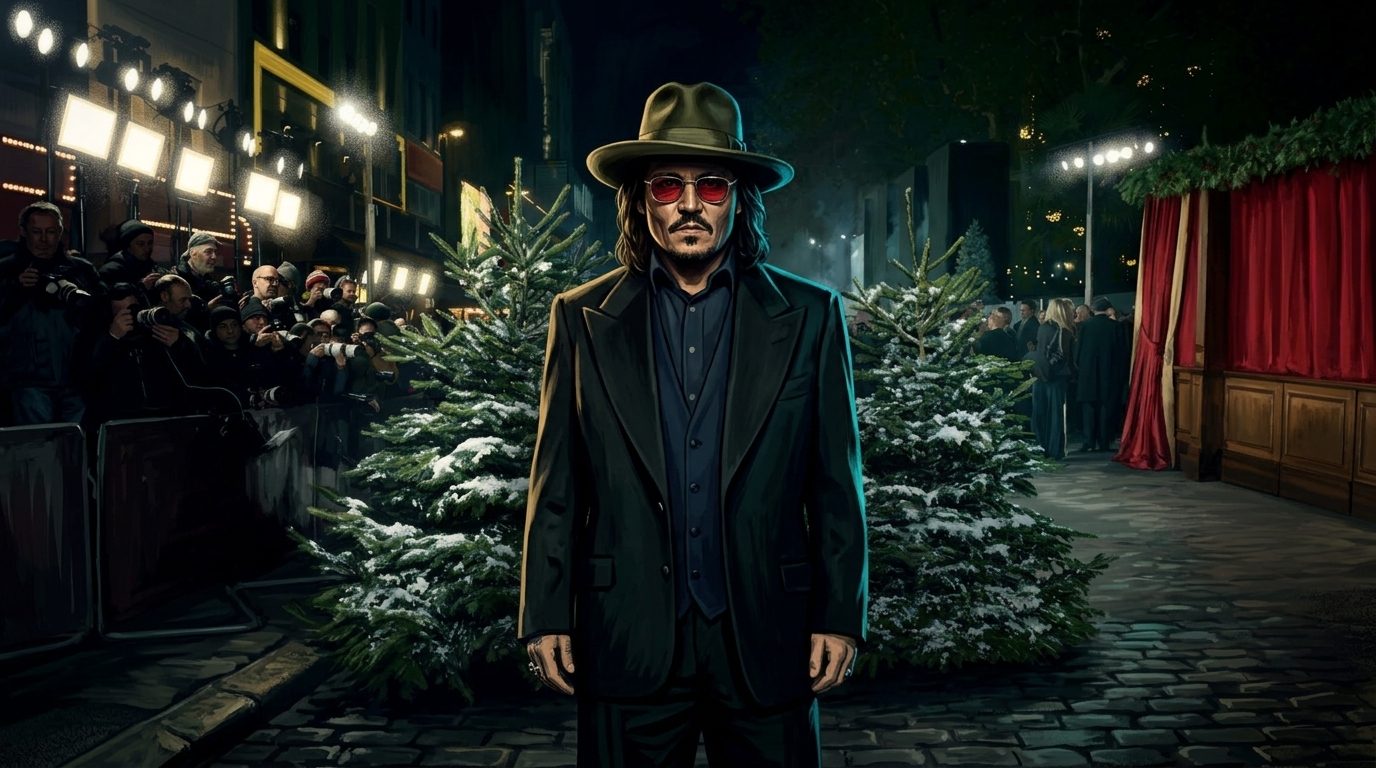
The campaign was the movie. Depp did not do a press tour. He did a residency. He turned up at San Diego Comic-Con dressed as Scrooge, throwing candy at fans’ feet. He showed up again at Bryant Park’s Christmas market, popping balloons and knocking over a tree while heckling an on-site Santa, and then walked out mid-character at Collider’s Directors on Directing panel to debut the trailer. This is Ebenezer’s first real studio lead since 2018’s Fantastic Beasts: The Crimes of Grindelwald, and the gap between those two titles is the whole story: years of smaller, stranger films (Minamata, Jeanne du Barry, the one he directed, Modi) while the studios waited to see if the public would let him back in. IndieWire talked to publicity veterans who described the approach plainly: “it’s also a strategy that helps the star skirt addressing himself.” Paramount backed that up with a promo reel of co-stars promising “a performance the likes of which you’ve never seen before,” and then let press-screening attendees post reactions before the embargo lifted, a wave that ran nearly unanimous in Depp’s favor.
That early chorus had a face attached to it.
https://x.com/TomChatalbash/status/2119976196305756584
Then the real reviews landed, and they agree on everything except the one thing being sold. Eve Stewart’s production design, Checco Varese’s cinematography, Andrea Riseborough’s Ghost of Christmas Past and Ian McKellen’s Marley all draw praise from both ends of the spectrum. Depp does not. Deadline’s Pete Hammond wrote that “Paramount’s marketing department wants us to believe this is all new but it really isn’t for the most part, just an excuse for Depp to play in the sandbox,” before turning around and praising the comeback itself. The Hollywood Reporter found that “the actor’s charisma and star power eventually come through,” and The Guardian said flatly that “as Scrooge himself, Depp is in fact rather good.” IndieWire’s David Ehrlich watched the same performance and called it “an advent calendar of empty affectations without a soul to anchor them,” then landed the line that will outlive this release: “He seems to have become very bad at acting.” Vulture’s Alison Willmore titled her review “Johnny Depp Is the Worst Part of Ebenezer” and wrote that he “behaves as though he’s alone onscreen, desperately trying to please the crowd by giving them what they want.” The Associated Press gave the film one star and closed on a redemption vehicle “for a fading star with a fresh Skydance logo attached.”
Read the two piles side by side and they are not describing different performances. They are describing the same mug, the same squint, the same comic rhythm imported straight from a pirate ship, and grading it against different questions. The friendly reviews are grading the comeback: is it fun to watch this man try again. The hostile reviews are grading the acting: is it good. Both answers can be true at once, which is exactly the trap Paramount built the marketing to exploit.
Even the number the studio is chasing admits the limits of the bet. Industry tracking points to an opening somewhere between $20 million and $25 million from more than 3,500 North American theaters, with Variety’s own reporting putting roughly $20 million domestic against another $20 million overseas across 63 markets. That is a solid specialty-sized Christmas number, not a tentpole, against nearly $90 million committed to making and selling it.
By the numbers:
- $38 million: reported production budget
- About $50 million: marketing spend, stunts included
- $5 million: Depp’s fee, with bonuses tied to box office
- Roughly $20 million domestic, $20 million overseas: tracking estimates ahead of the opening
The fair concession: this is not a backlash story. A National Research Group study from April ranked Depp among the ten actors most likely to pull people into a theater, ahead of Tom Hanks, and exhibitors told Variety they are not sensing pushback. Christmas titles have legs, and Riseborough and McKellen earn the ticket on the word of critics in both camps. Paramount’s bet that the public has moved on is probably correct. Amazon took the opposite gamble this month, playing it safe with a heist movie built to offend no one, while Paramount walked straight into a fight over an actor’s history on purpose, because that fight was the marketing plan.
Willmore’s framing is the sharpest one in the pile: “The industry is officially declaring that it doesn’t care what Depp is alleged to have done.” What the industry actually did was pay its star $5 million, spend ten times that announcing his return, and let a weekend decide whether the bet pays off. The acting was never the product on sale.