
Stream It, and clear a Tuesday night rather than wait for the awards campaign to tell everyone what to think. Curry Barker’s Obsession reaches Netflix in the U.S. on Nov. 17, after a Peacock window that opened in July, carrying the strangest math in recent horror: a $750,000 production that grossed more than $524 million worldwide, making it the highest-grossing release in Focus Features history, with an A- CinemaScore and a 93% critics score against a 94% verified-audience score on Rotten Tomatoes. None of that is the actual reason to watch it. The reason is Inde Navarrette, delivering the year’s most physically committed horror performance in a part that asks her to be three different women without ever leaving the room.
Netflix announced the date itself:
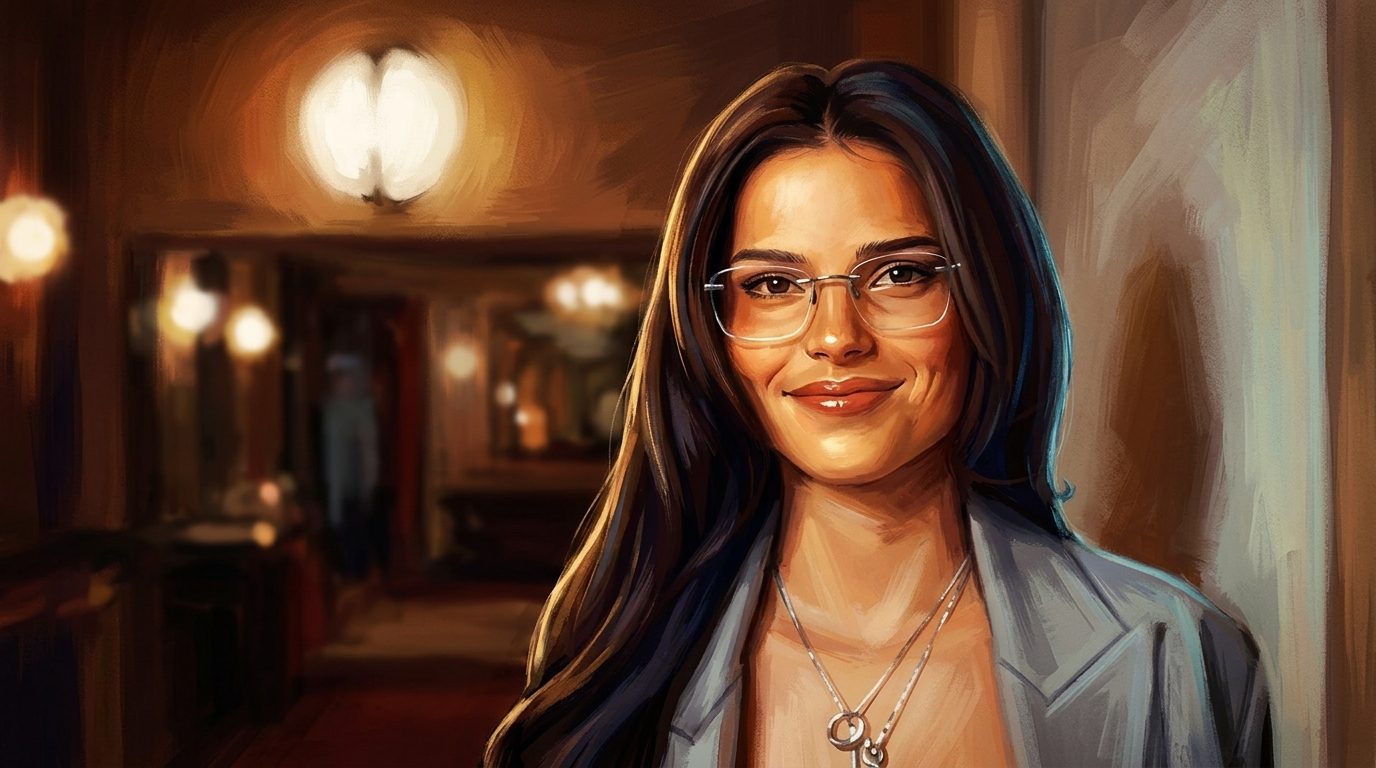
She plays Nikki Freeman, the co-worker that Bear (Michael Johnston) has spent years failing to say the true thing to, and once the wish at the center of the film takes hold, Navarrette has to keep two people fighting inside one body. Variety’s Guy Lodge watched both versions flicker against each other in what he called an “extraordinarily expressive performance,” with Nikki surfacing as “a grinningly perfect, Zoomer-era Stepford facsimile,” then “a screamingly volatile banshee,” then “a depleted, scooped-out shell of a woman, stripped of agency and bodily control.” That last register is where the film earns whatever seriousness it claims, and it is entirely Navarrette’s doing rather than the script’s.
The proof is a single take Barker keeps being asked to explain. Nikki comes apart in the corner of a bedroom at night, and the scene was shot during reshoots nearly seven months after Navarrette had already finished the rest of the part. Barker has said she shut him down before the cameras rolled: “She’s like, ‘Don’t say a word. Just let me do it.’” He let her go once, and that was the whole shoot. “She literally did it in one take, which is the case for a lot of her stuff in this movie,” Barker recalled, and the decision to skip coverage on a $750,000 production, where coverage is normally the cheapest insurance a director can buy, says as much about his trust in her as the scene says about the character.
https://www.youtube.com/watch?v=C8YDY3ivHKk
The rest of the craft is quieter by design. Taylor Clemens’ lensing gives the film dim, minty tones, and Rock Burwell’s score runs an unsettled, inhuman rumble underneath rooms that never stop looking ordinary. Barker is reaching for a monkey’s-paw story told entirely from the perpetrator’s side, which is a harder trick than the logline suggests, and IndieWire’s Christian Zilko credited Navarrette with making the gamble work, calling her “brilliantly twisted” as “what’s left of Nikki.” Not every critic bought the last turn: Espinof’s Victor Lopez G., writing on Rotten Tomatoes, argued the film eventually “embrace[s] the ‘crazy girlfriend’ trope in a way that ultimately backfires,” and that complaint has real teeth in the final twenty minutes, when the movie starts enjoying the thing it spent an hour diagnosing.
Barker’s path here is less of a fluke than the numbers make it look. His previous feature, Milk & Serial, cost about $800 and went straight to YouTube; before that there was a short called The Chair and a sketch channel run with Cooper Tomlinson. Focus picked up Obsession out of TIFF’s Midnight Madness, and Barker has since shot Anything but Ghosts with Aaron Paul and Bryce Dallas Howard and signed to direct a new Texas Chainsaw Massacre for A24 (a nine-hundred-fold jump in budget between his last two features, if anyone is counting). Obsession plays like a filmmaker who already knew exactly what he was doing at $800 and simply got handed the money to prove it.
Collider already has Navarrette in the thick of the Best Actress conversation for the next Oscars, and Vulture’s Nov. 13 Oscar Futures column puts Julianne Moore’s turn in The Debut at the top with Navarrette next in line, calling Obsession “Gen-Z’s own Fatal Attraction.” Focus is reportedly building a campaign around the film, which means this performance is about to become something people argue about before they have actually sat through it. Streaming it now, ahead of that, is the better use of a Tuesday.
This will bore anyone hunting for lore. Barker offers no rules for the wish and no interest in explaining it, which reads as a confident choice more than a missing scene. The gore-averse should know the last stretch is crueler than the opening hour promises, and jump-scare shoppers should expect a talky, domestic first half before the movie earns its name. The audience that actually made this a hit skewed young, with 75% of opening-weekend ticket buyers between 18 and 25, and anyone building out the rest of the queue can check Netflix’s current mood-sorted lineup or go the opposite direction entirely with the newly R-rated Werwulf heading into theaters next month.
Stream It, with one qualification: the reputation as a phenomenon is louder than the film itself, which is small, mean and carefully made on a budget that would not cover catering on most studio horror pictures. Watch it on a Tuesday, before Navarrette’s performance turns into something people quote instead of something they actually watch.