
Wild Horse Nine is the funniest film Martin McDonagh has made and, in its last half hour, the most sorrowful, and John Malkovich is the reason both halves hold together instead of pulling apart. It belongs in theaters, ideally with a full room, since a good part of the pleasure is hearing strangers laugh at a line and then feel the laugh curdle thirty seconds later. The film runs 117 minutes and spends nearly all of them earning a turn most comedies would not dare attempt.
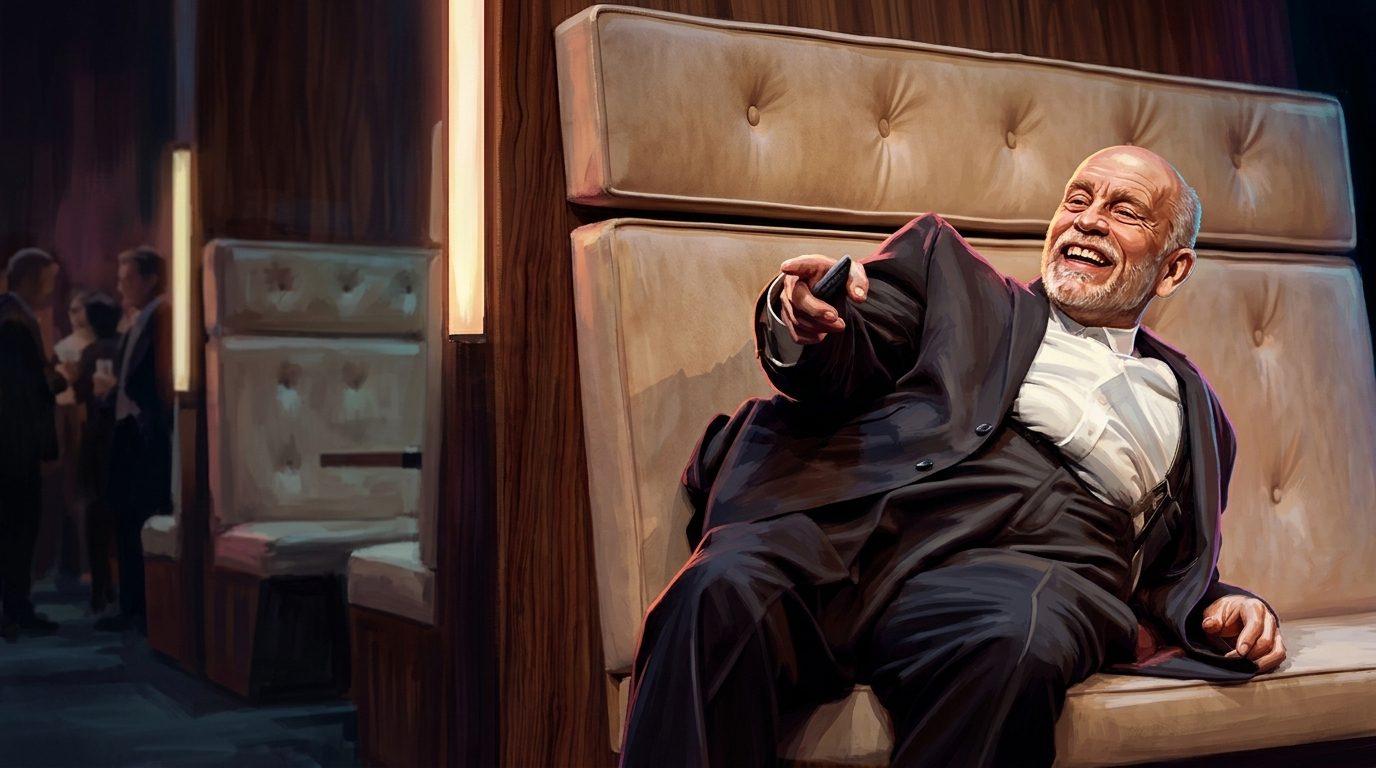
Malkovich plays Chris Carlisle, a CIA veteran on what might be a farewell posting to Easter Island in 1973, and he works a comic register that belongs to nobody else currently working. He recites his career into a dictaphone the way a man reads off a grocery list, landing on “Guatemala, successful. Congo, successful. Bay of Pigs, less successful,” as Guy Lodge transcribed it for Variety. The rest of the performance is physical rather than verbal. Peter Bradshaw caught the “unmistakable nasal croon or whine” that keeps settling into a pursed-lip pout, and the combination never lets an audience fully decide how contemptible Chris is being in any given moment. That uncertainty is the performance: a professional monster who has started to lose his own grip on the joke of himself, and who is funnier for not knowing it.
McDonagh’s ear for dialogue gets its cleanest demonstration at a concert. Chris, who has spent the preceding hour needling two Chilean students on the trip, watches a folk singer perform and leans over to deliver, “He’s on a lot of our lists, actually.” Bilge Ebiri noted in Vulture that the singer is Víctor Jara, murdered by Pinochet’s regime weeks after the scene is set. Eight words turn a throwaway joke into a death warrant, and the script never raises its voice to make the turn land. (A lesser writer would have underlined it with music; McDonagh lets the silence do that instead.)
Ben Davis, McDonagh’s cinematographer since Seven Psychopaths, gives the film its texture, and the choice of location is part of the craft. Only one previous feature had ever shot on Easter Island, 1994’s Rapa Nui, and the crew shipped gear and period vehicles in by boat from Santiago because there was no production infrastructure to use. Davis filters for a weather-beaten 1970s grain while letting the island’s natural color punch through against Santiago’s institutional greys, so the moai end up functioning almost like a jury watching the men talk. Carter Burwell’s fifth score for McDonagh, blending Western strings with Andean instruments, stays small until the film needs it, which is the correct instinct for a story that spends two acts pretending to be lighter than it is.
This is McDonagh’s fifth feature, following The Banshees of Inisherin’s nine Oscar nominations and zero wins. The engine is familiar: two men bicker in a strange place while one of them is sitting on a secret. McDonagh knows exactly what he is repeating. He wrote GUILT and REGRET at the top of page one of the script and told The Guardian, “Maybe this is my first old-man movie.” It plays like the third panel of a triptych that began with In Bruges and continued through Banshees, and it is the panel where the man holding the secret has finally run out of time to keep holding it.
That is the swerve worth flagging before anyone buys a ticket expecting a caper to stay a caper. The first hour runs on the same fuel as In Bruges; the last act trades the jokes for a reckoning with mortality and changes the temperature of the room without warning. Manohla Dargis found Malkovich mesmerizing “even when the character and story shift into an unconvincingly more serious register,” and that qualifier is doing real work. IndieWire’s David Ehrlich graded it a B- and argued that real Chilean history sits badly under a buddy comedy built on invention, and The Wrap called the result “neither endearing nor twisted enough to work.” Bradshaw’s three-star review landed the sharpest version of the complaint: an American setting brings “more violence, more strenuous sweary machismo, less comedy, less charm.” Anyone wanting a clean procedural about the 1973 coup will be bored by the bickering, and anyone who needs the jokes to stay jokes for two full hours will be unsettled by the pivot.
None of that has slowed the film down. It premiered in competition at Venice on Sept. 3, drew a 13-minute standing ovation, and won Malkovich the Volpi Cup for Best Actor on Sept. 12. Commercially it opened to $5.9 million from 1,100 theaters, which Deadline called the best opening weekend of McDonagh’s career, and took $1.9 million in the UK and Ireland for second place behind Ramayana: Rise of a Legend. At a moment when most studios are chasing the Thanksgiving teenager with movies like the one reviewed in How to Rob a Bank Review: A Heist Filtered Through Edits, Searchlight is doing the opposite, betting on a 72-year-old actor’s dictaphone monologue, and the bet is paying off with just under $14 million worldwide so far.
The recommendation holds with one qualification. Malkovich has two prior Oscar nominations, both supporting, and no wins, and this is the performance built to finally fix that record. Audiences who loved In Bruges for its banter should know the banter is still here, right up until McDonagh decides it isn’t, and that decision is the whole point of the picture.