
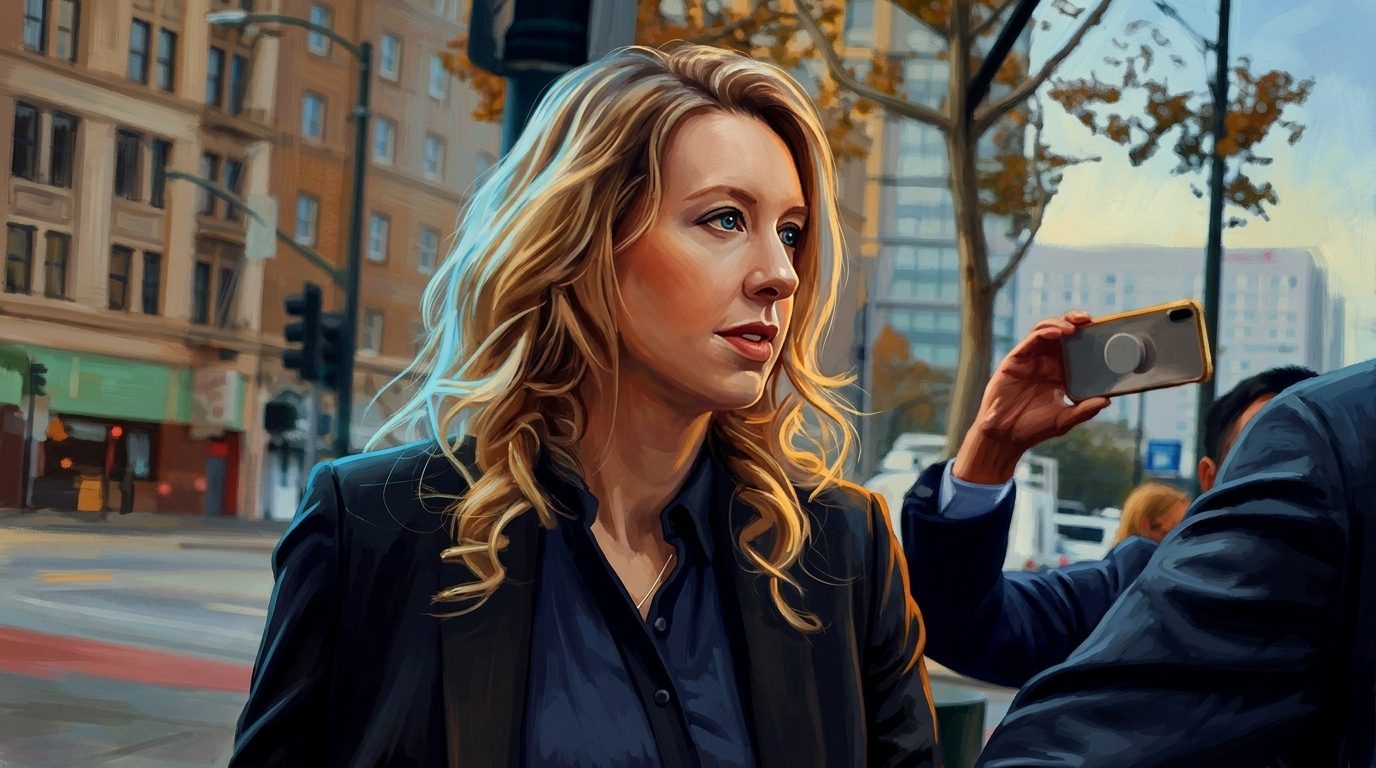
Thanksgiving week doesn’t usually get a new release, but You Can See Everything just became one anyway. Nathan Fielder and Lance Oppenheim’s Elizabeth Holmes film hit digital in the U.S. on Tuesday at $19.99 to rent and $24.99 to buy on Prime Video and Apple TV, just over a month after it left theaters. Five ways to spend an evening with it follow, sorted by who else is on the couch, with the one question money can’t settle saved for last.
It runs 2 hours 54 minutes and carries an R rating for language and some graphic nudity, per Apple TV’s listing. That runtime matters more than the price tag. This is a three-hour sit, and which version is worth paying for depends entirely on who is in the room.
If a theater is still close enough
This one started as a secret Telluride premiere and turned into the movie nearing $100 million at the box office that everybody at the office has an opinion on, and it is still playing in some U.S. theaters as of this week, per JustWatch. General admission averaged $13.29 in 2025, with premium large format at $17.69, according to EntTelligence’s annual report. A matinee runs under that average, which makes an afternoon seat the cheapest ticket on this list for one person.
Best for: anyone who wants to hear a full room go quiet at the same moment, and the price-conscious viewer flying solo.
Where: U.S. theaters where it’s still booked, checked Nov. 24, 2026.
Rent tonight if the table is already arguing
At $19.99, this rental is roughly one and a half movie tickets, and for three or more people splitting one screen the math flips in its favor fast. The fuss behind the price is real. The film opened to $15.6 million domestically in mid-October and has since crossed $100 million worldwide, Variety reported. “It’s the ‘Have you seen it?’ movie of the season,” Rentrak’s Paul Dergarabedian told the Los Angeles Times. That’s the case for paying the rental premium tonight instead of waiting for it to get cheap.
Best for: a household of three or more, or anyone who needs a hot take loaded before Thursday’s table talk starts.
Where: Prime Video, Apple TV and Fandango At Home, $19.99 to rent, checked Nov. 24, 2026.
Buy at $24.99 if the seam is the point
NPR’s Linda Holmes called the film “best treated as two movies stitched together,” and the stitching is exactly what a second look is for. The first ninety minutes sit in the 34 days before Holmes reports to prison, inside the Del Mar house she shares with partner Billy Evans and their children. The second ninety, filmed two years later with Holmes unavailable, swings into something far stranger that the filmmakers kept secret going in. Five extra dollars buys the freeze-frame version of that pivot.
Best for: Fielder completists, Theranos readers with pencil marks in the margins, anyone who wants to pause and squint at the staged parts.
Where: Prime Video, Apple TV and Fandango At Home, $24.99 to buy, checked Nov. 24, 2026.
Wait for HBO Max if the subscription is already paid for
A24’s films land on HBO Max in the U.S. in the pay-1 window under the multiyear deal the studio renewed with Warner Bros. Discovery in January. The Hollywood Reporter puts the likely arrival around four months after the theatrical run, which lands near February 2027, though that’s an estimate, not a posted date. Two and a half months of patience trades for nothing extra beyond the subscription, which is the same bargain this site flagged when weighing whether a cheaper, older release like Street Fighter’s VOD arrival was worth renting now or waiting.
Best for: the budget-minded, and anyone who has never once finished a three-hour film in a single sitting.
Where: no subscription service carries it yet. Theatrical and digital-purchase only, checked Nov. 24, 2026.
Skip it if the case needs prosecuting
The sharpest objection comes from NPR, which argues the film “stacks the deck in answering them by setting aside some of the evidence.” Holmes tells Fielder she has never lied, and the film spends its runtime on whether she believes that rather than on the whistleblowers who say she tried to ruin them. Linda Holmes’ verdict lands hard: “the best way to enjoy the film is not to look too closely.” Anyone who wants receipts instead of a riddle has other options on HBO Max already.
Best for: viewers who want accountability more than ambiguity.
Where: nowhere tonight. This is the save-your-money pick.
What $103 million actually bought
Box Office Mojo has the film at $93.5 million domestic and $102.9 million worldwide, made in secret for a reported $7 million. That domestic number is already the second-highest ever for a nonmusic documentary, trailing only Fahrenheit 9/11’s $119 million, the Los Angeles Times reports. For scale, Alex Gibney’s four-hour Musk documentary, released the same month, took in about $760,000 in theaters total.
Owen Gleiberman called it “a shameless, fascinating, reality-TV-eats-its-tale look at entitled duplicity”. The trailer sells the hangout-movie surface without giving away where the second half turns:
https://www.youtube.com/watch?v=HvW_N5p1q44
The awards math the price can’t settle
No documentary has ever been nominated for best picture in 98 ceremonies, and A24 is submitting this one anyway, across picture, director, documentary feature, cinematography, editing, production design, costume design, makeup and hairstyling, sound and score, Variety reports. The track record isn’t kind to that bet. Michael Moore pulled Fahrenheit 9/11 out of the documentary race entirely to campaign for best picture and still came up empty, and the branch has passed before on Hoop Dreams and Roger & Me, IndieWire notes.
The guild lanes are closing faster than the Oscar lane. The Directors Guild ruled the film ineligible for its top theatrical feature prize because it’s a documentary, leaving only the documentary category there. The Golden Globes bar documentaries from picture, director and acting outright, with one narrow door: the cinematic and box office achievement award, which requires $150 million worldwide and $100 million of it domestic, a bar Gold Derby confirms the film has cleared and been submitted for. Only one other documentary in history, Fahrenheit 9/11, has ever cleared $100 million domestic, which means the gross itself is the only reason this film got that submission in at all. Critics Choice remains the one major precursor where it competes across the board, acting races included.
Gleiberman’s review goes further than most, arguing that “anyone who votes for it won’t just be voting for best picture.” A $19.99 rental answers tonight’s question in one line. The other question belongs to a branch that has said no 98 times running, and a $102.9 million worldwide gross will not appear on anyone’s ballot, even though it’s the reason the question is being asked out loud this year.