
The heptapods come to Earth to teach humanity their written language because, in about 3,000 years, they will need humanity’s help in return. The phrase that nearly starts a war, “offer weapon,” is a mistranslation. The glyph also carries the sense of tool or means, and the tool is the language itself. Learning it is what turns Louise Banks’s memories of her daughter into memories of a future that has not happened yet.
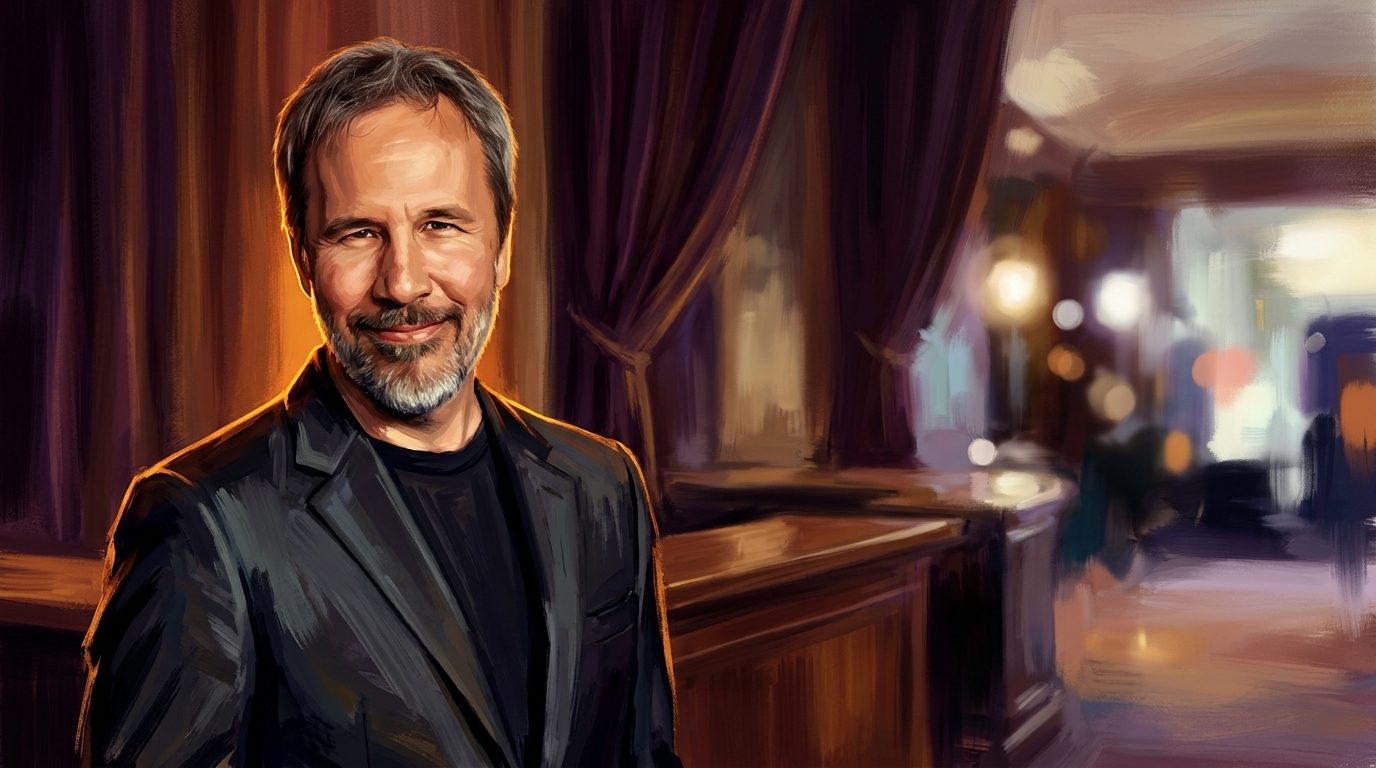
Denis Villeneuve directed Arrival from Eric Heisserer’s adaptation of Ted Chiang’s novella “Story of Your Life”. Amy Adams plays Louise, the linguist the Army brings in to talk to the ships. Jeremy Renner is the physicist working beside her, Forest Whitaker the colonel running the operation, Michael Stuhlbarg the intelligence officer watching all of it. Arrival streams on Paramount+ as of Nov. 11, 2026. Nothing plays during or after the credits.
Spoiler Warning
Everything below spoils why the heptapods really came, the mistranslation that nearly starts a war, and what Louise knows about her daughter Hannah before she is even born.
The Message Arrives in Twelve Pieces
Twelve ships land at twelve sites around the world, and each one holds a fragment of a single message. Ian figures out that the symbol for time runs through the writing and that it occupies exactly one-twelfth of the three-dimensional space it projects into. The gift arrives built so that no single country can read it alone.
Costello, one of the two heptapods Ian has nicknamed after the comedy duo, gives Louise the reason for the visit: they came to help because in 3,000 years they will need humanity’s help in return. The film says the rest of it plainly, through Louise: “The weapon is their language. They gave it all to us.”
Why “Offer Weapon” Almost Starts a War
That single glyph is the whole crisis. Weapon also carries the sense of tool or means, and everything that follows hangs on the gap between the two readings. China translates the message as “use weapon” and cuts off communication, and the other sites fall in line behind it.
China learned the language at a mahjong table, and Louise’s read is that a competitive game taught the heptapods to frame the exchange as a contest, which is why “weapon” came back when “tool” would have worked just as well. She makes the case to Weber with a different game: “Let’s say I taught them chess instead of English. Every conversation would be a game, every idea expressed through opposition. Victory… defeat. You see the problem? If all I ever gave you was a hammer…” Weber finishes the thought for her: “Everything’s a nail.”
Russia’s team translates its own fragment as “there is no time” and hears a threat in it rather than a fact about the gift. Shang issues a 24-hour ultimatum, Russia, Pakistan and Sudan follow, and rogue soldiers plant a bomb that puts Abbott out of commission. Louise stops the countdown with a stolen satellite phone, calling Shang and reciting his wife’s dying words, words she has from a United Nations reception 18 months in her own future. Heisserer wrote roughly 50 versions of that line in Mandarin before Villeneuve settled on one: “In war there are no winners, only widows.”
The Flashbacks Are Flash-Forwards
Hannah dies at twelve of an incurable illness, and she is not born until years after the ships leave. The heptapod script has no beginning or end, what Ian calls nonlinear orthography, and fluency in it rewires Louise until past, present and future stop arriving in order. “It was my intention from the start for [the reveal] to never feel like a magic trick,” Heisserer told BuzzFeed News. The film plants its clues early instead of saving them for a twist: a girl pulling on her boots, Louise asking her what day it is.
The Choice, and What It Costs
Louise knows the shape of Hannah’s whole life before she chooses to have her. She keeps that from Ian, and when she finally tells him she knew, he leaves them both. BuzzFeed laid out the arithmetic: she knew, before she married Ian, that the marriage would end. She knew, before Hannah was born, that Hannah would die.
Chiang’s novella reaches the same place by a different road. His daughter is never named and dies at twenty-five in a climbing accident, not at twelve of an illness. The change matters. A fall can be prevented, which would leave room to ask whether Louise should have acted. An illness in this film cannot be, so she is never a mother who ignored a warning. She is a woman who agreed to a certainty with her eyes open.
Then she asks Ian the question the whole film has been circling. “If you could see your whole life from start to finish, would you change things?” He has no idea yet what he is really answering. “Maybe I would say what I feel more often than I… I don’t know.”
What Arrival Argues About Time and Free Will
The answer comes back as voiceover, over images of her daughter: “Despite knowing the journey… and where it leads… I embrace it. And I welcome every moment of it.”
Chiang framed the same idea in the novella as a question about obligation: “What if the experience of knowing the future changed a person? What if it evoked a sense of urgency, a sense of obligation to act precisely as she knew she would?” That is the version of free will Arrival runs on. Louise cannot alter what is coming, and the film never pretends otherwise. What she can do is consent to it, and consent is what turns a fixed life into a chosen one. The heptapods’ language does not give her the power to change the future. It gives her a grammar in which saying yes to it becomes possible.
The Awards Ledger, and Where Villeneuve Went Next
Arrival took eight Academy Award nominations and won one, Best Sound Editing, for Sylvain Bellemare. Adams was not among the nominees, and Villeneuve told Entertainment Weekly, “She was the soul of this movie.” Jóhann Jóhannsson’s score never entered the race at all: the Academy ruled it ineligible because Max Richter’s “On the Nature of Daylight” bookends the film, even though a Paramount source said original material made up 86 percent of the soundtrack.
Villeneuve’s next film was Blade Runner 2049 in 2017. Then came Dune in 2021 and Dune: Part Two in 2024, which made $715 million worldwide against the first film’s $411 million. Dune: Part Three opens Dec. 18.
A film that cost $47 million, grossed $213.6 million worldwide, and ends on a woman agreeing to her own grief is still the boldest thing Villeneuve has put in front of an audience.