
There is no official canon for 1408, and the sequel taking shape right now will settle the question with what ends up in the finished script, not with anything a director says to a podcast.
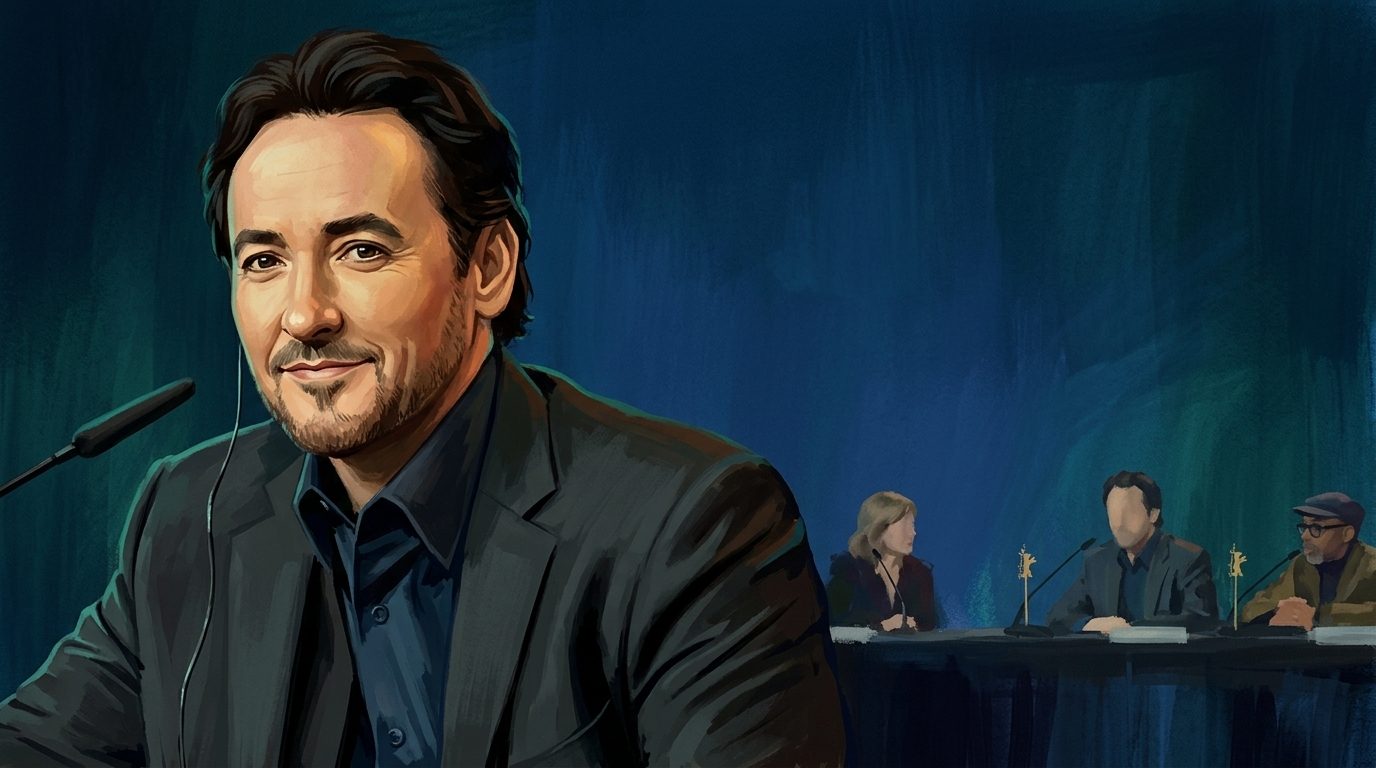
Variety reported on Nov. 6 that Natalia Dyer will star in a sequel to the 2007 Stephen King adaptation, with Elijah Wood in a supporting role and John Cusack and Samuel L. Jackson in talks to return as secondary characters. Mikael Håfström, who directed the original, is back and co-wrote the new script with Mark Verheiden. Production is slated for the first quarter of 2027, with no distributor or release date announced. The original film has four separate endings, three of them released only on home video, and nobody involved has said which one the sequel treats as real.
Håfström has a favorite among the four. A favorite is not the same as a ruling, which is a different kind of puzzle than the one worked through in Arrival Ending Explained: Why the Heptapods Came, where the ambiguity sits inside a single cut of a single film.
Spoiler Warning
Everything below spoils all four endings of 1408 (2007) and the ending of Stephen King’s short story.
The Four Endings, and What Each One Leaves a Sequel
-
Theatrical: Mike survives, with proof. Mike burns the room, firefighters pull him out, and he reconciles with Lily. She finds his damaged recorder among his belongings, and both of them hear their dead daughter Katie’s voice on it, confirming the whole night actually happened, as laid out on ScreenRant. A sequel built on this gets a living Mike and a closed case. Once two people have heard the tape, the room is a fact, not a theory.
-
The cut where Lily hears nothing. The rescue and the reunion play out the same, but only Mike catches Katie’s voice on the recorder, leaving Lily unconvinced, per CBR. This version hands a sequel a living Mike and a marriage that cannot agree on what happened to him. The doubt is the asset.
-
The director’s cut: Mike dies, and Olin gets the tape. Mike dies in the fire he sets. At the funeral, Olin tries to hand Lily a box of Mike’s belongings and she refuses it. In the car, Olin plays the recorder, hears Katie, and sees Mike’s burned body in the backseat. The film closes on the gutted room, where Mike’s apparition hears his daughter and walks out (ScreenRant). This version gives a sequel a dead Mike who can still appear, and an Olin who already knows the tape is real.
-
The publisher ending: Mike dies, and the manuscript gets out. There is no funeral scene; funeral audio plays over shots of Los Angeles instead. Mike’s publisher, Sam Farrell, later finds the manuscript Mike wrote inside room 1408 and starts reading it, and his office doors slam shut as Mike’s father’s voice says, “As you are, I was. As I am, you will be,” according to High On Films. This version leaves a sequel a paper trail, a believer who never set foot in the room, and a strong hint about who the room wants next.
Why Cusack’s Return Doesn’t Settle It
The A.V. Club made the obvious leap, writing that Cusack’s involvement “suggests that, of the original film’s various endings, ones where horror writer Mike Enslin survived are likely canon.” Variety’s own wording is more careful than that: Cusack and Jackson are in talks, not signed. Even a closed deal wouldn’t settle it, since two of the four endings kill Mike off and still put him back on screen, once as a corpse in a car and once as an apparition in a burned room. A tape recorder gives a dead man dialogue in three of the four versions. Casting tells you who’s available. The script is what decides what happened to him.
Håfström has already said in public which ending he’d pick. On The Kingcast, he described the theatrical ending as the stronger choice over the alternate he shot later: “It was stronger, and much more emotional. The other one was worse, it had a couple of good moments, but this was more right for the film, so that’s where we ended it.” He’s described the home-video versions as a later experiment, not a response to bad test screenings: “We shot the film, and we shot it with the ending that ended up being the theatrical ending.” That settles his preference. It doesn’t settle the sequel, which he co-wrote but doesn’t own alone.
The Trap at the Center of the Story
The original works because one man can’t leave one room. Olin warns Mike that 56 people have died in 1408 and that no guest has lasted an hour, and the clock radio starts a 60-minute countdown the moment Mike settles in, a detail confirmed by Bloody Disgusting. King never wrote a sequel to the short story the film is based on, and King’s Mike has no wife and no dead daughter at all; the grief the room feeds on is entirely a screenplay invention. Håfström and Verheiden aren’t adapting a second King text. They’re inventing the rules of a second stay from nothing.
There’s also a physical problem nobody’s addressed yet. Mike burns the room in all four endings. Any sequel has to explain how a room that burned down gets a new guest, whether the Dolphin rebuilt it, relocated it, or never needed the walls in the first place.
By the numbers: 1408 ran on a $25 million budget against $132.9 million worldwide, a 104-minute runtime spent mostly inside one room, a stated 56 prior deaths in the room, and a 60-minute clock that starts the moment the door shuts.
The Two Paths, and the One to Take
That leaves a sequel two honest options. One repeats the trap: Dyer checks in, the clock starts, the room works through her own losses. Done well, that’s still a cover version of the first film. The other follows the damage outward, past the locked door and into the life of someone who survived it, or someone who loves them. That path breaks the original’s best trick but opens the only story King’s short story actually tells.
The same tension over which timeline to trust shows up whenever a franchise has to decide what it believes about its own past, which is why a piece like DC Movies in Order: Every Film and the One to Start With exists at all. 1408 has the smaller version of that problem: four endings, one room, no studio statement.
Which Ending the Sequel Should Inherit
The pick here is the cut where Mike survives and Lily hears nothing. A living Mike means Cusack can stand in the new film as the one witness who matters, whether or not Dyer’s character believes him. Lily staying outside the proof means the room keeps its deniability going into a second film. Dyer gets a better reason to walk into a bad room than curiosity: a man she’s been warned not to trust. The theatrical ending is the stronger ending for one movie, since it earns its reconciliation outright. As the foundation for a second one, it spends the single resource the series actually needs, which is doubt.
The correction worth making is King’s own. In the short story, Mike survives and gives up writing. He sleeps with the lights on, has the phones pulled out of his house and draws the curtains before dark, according to ScreenRant. No version of the film has ever used that ending. It’s the one a sequel is best positioned to tell: not whether Mike got out, but what an hour in that room did to everything that came after it.
The room has outlasted four endings and one author who never wrote it a second chapter. Whatever ending the sequel claims, it will be judged by the only rule 1408 has ever enforced. Nobody checks out clean.