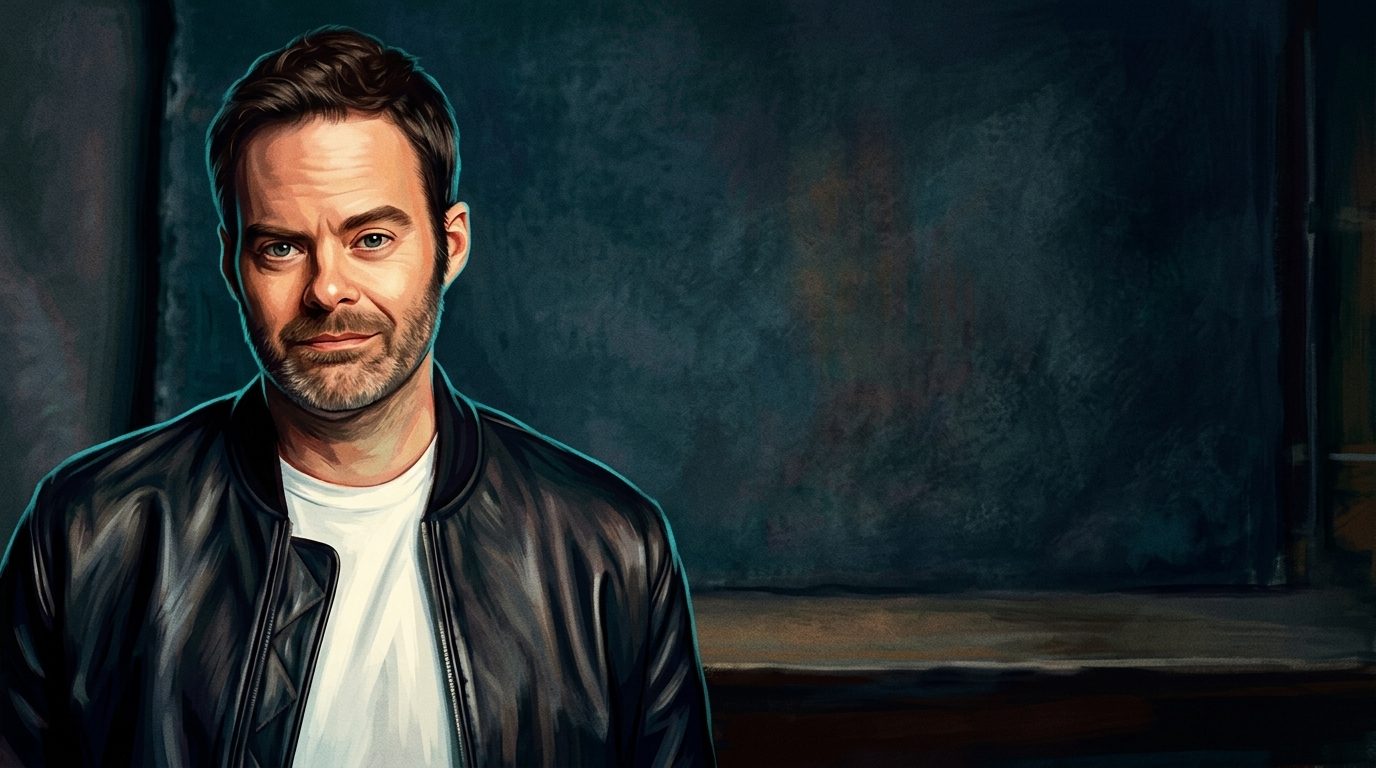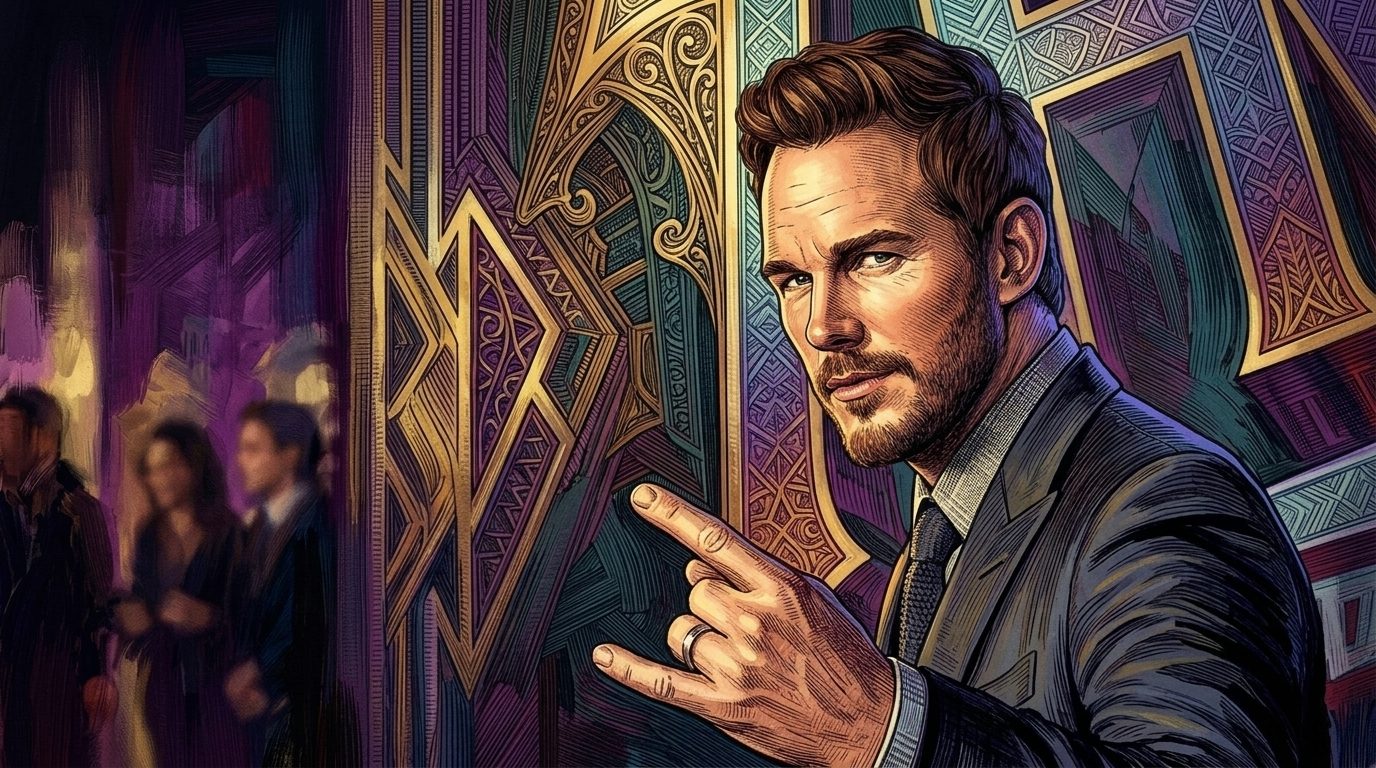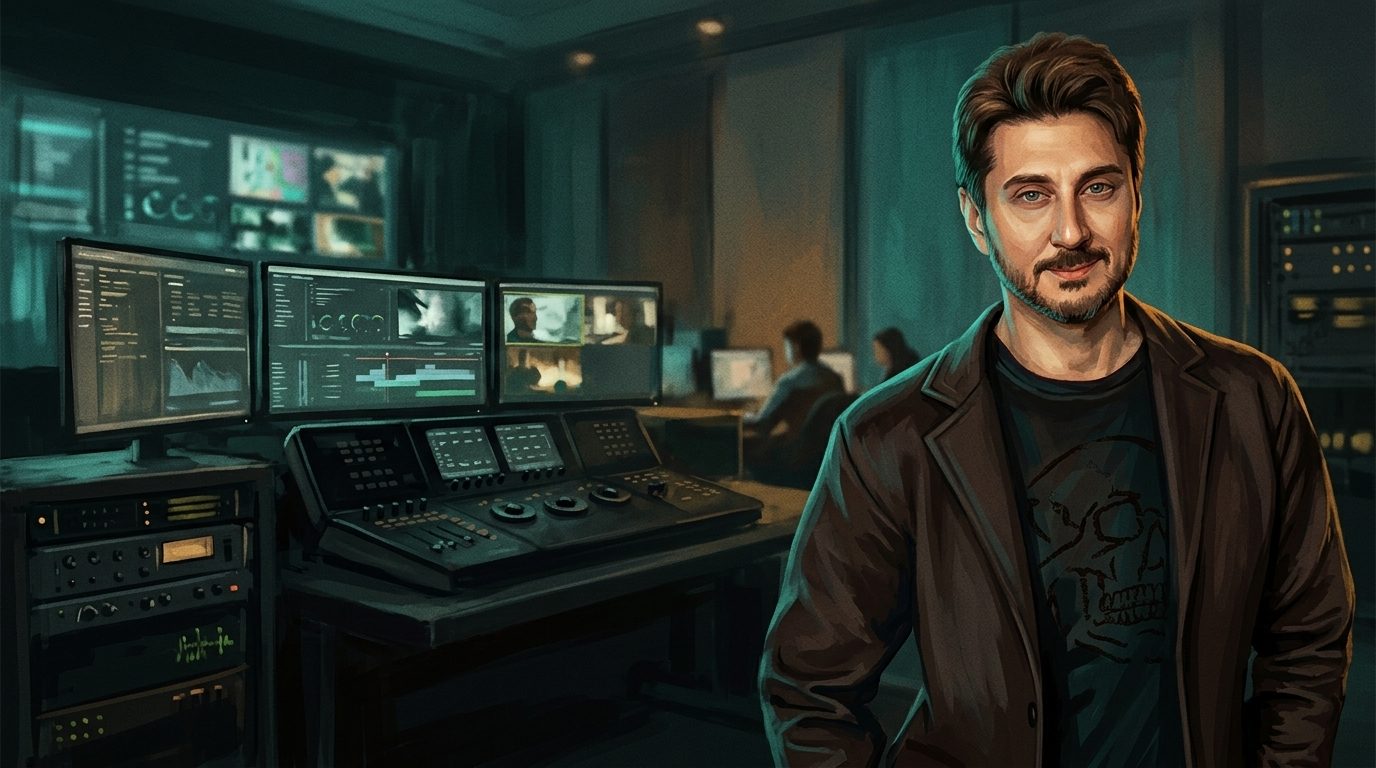


Legacy casting usually fails because the new actor does an impression. The Hunger Games: Sunrise on the Reaping proves what happens when a studio asks for a performance instead of a tribute act.
Three actors carry that argument: Jesse Plemons, Elle Fanning and Kelvin Harrison Jr. One performance cuts against it, and it is worth separating the performance from the actor before anyone blames Joseph Zada for a problem the script built.
Rebuilding a character nobody can mimic
Start with Jesse Plemons as Plutarch Heavensbee, the role Philip Seymour Hoffman played in his final film roles. RunPee’s Dan Gardner names the problem the part creates: Plemons has “the unenviable job of portraying a young Philip Seymour Hoffman,” playing “a character that is consciously acting in about half of his scenes, where he cannot express who he really is.”
Nobody mimics that. A man performing a mask for half of every scene needs an actor who understands why the mask exists, not one who can reproduce Hoffman’s line readings. Plemons told the Press Association the offer “made me really think about whether or not I wanted to do it because I have so much respect and admiration for him,” and signed on anyway because he “really wanted to explore this character.” That is curiosity, not reverence for a performance, and Collider credits the result with capturing “the spirit of Phillip Seymour Hoffman’s Plutarch Heavensbee, while also giving him enough moral ambiguity to make his place in the narrative intriguing.”
Elle Fanning gets the same treatment on a smaller role. This film’s Effie Trinket is a Capitol stylist helping dress District 12’s tributes, decades before she becomes the district’s escort, the version Elizabeth Banks played. Banks texted her blessing directly: “I give you my blessing, make her your own.” RunPee says Fanning “brought exactly the right flamboyance and grace that the role demands,” which reads like a woman who has not yet been ground down by the job, not a younger Banks.
Kelvin Harrison Jr. drew the hardest version of the assignment: Beetee, a character defined by Jeffrey Wright’s cadence across three films, Catching Fire and both Mockingjay installments. RunPee draws the line better than anyone could: “He didn’t need to imitate the character. This is a case where he needs to channel the actor Jeffrey Wright, who has his own special style. I think he nailed it.” Harrison texted Wright before shooting. Wright, in Harrison’s words, “was really happy for me, but in his very Jeffrey way.”
Ralph Fiennes anchors all of it as Snow, and nobody is arguing about that casting. RunPee: “Ralph Fiennes is, as expected, magnificent as Snow. He’s magnificent in everything.” That matters because the franchise already showed what failure looks like here. Variety’s Owen Gleiberman wrote that in the 2023 prequel, “it was impossible to believe that blah Tom Blyth would grow up to be sinister President Snow.” Fiennes solves the exact problem Blyth could not, the same way a long-running franchise’s sequel can finally earn its keep by fixing a mistake instead of repeating it.
Where the script, not the actor, loses the thread
The honest concession is Joseph Zada’s Haymitch, and it is worth being precise about where the problem sits. RunPee hedges hard: “Physically, he’s an… interesting choice for Haymitch, but I feel like he pulled off the accent consistently. I wouldn’t say he was spectacular, but this was a very demanding role.” That is a note about a performance boxed into an impossible job, not about an actor who cannot act. Haymitch arrives as a sunlit kid with a girlfriend and a birthday, and the only reason the audience cares is that it already knows what he becomes 24 years later. That is a writing decision, not a casting one.
The Hollywood Reporter disagrees entirely, calling Zada’s turn star-making and noting that while he does not look like Woody Harrelson, “the voice is convincingly that of the Haymitch we know.” Reviews split on Zada the same way they split on nearly everything else this movie attempts.
Kieran Culkin’s Caesar Flickerman is the other partial miss. Culkin told The Hollywood Reporter he initially figured taking the role was a no-brainer in the wrong direction, since everyone loves Stanley Tucci’s version, before deciding “I found a different take on it, something that I think connects to his.” Different is not automatically better, and Gleiberman’s review agrees: Culkin “is fine, but not nearly as stylishly depraved as Stanley Tucci.”
The Capitol is where the film’s love of its own excess costs it generally, not just in one performance. A franchise this old has survived recasting its iconic roles before, the way DC’s revolving door of leading men eventually needed its own order guide just to keep track. Camp dressed up as tribute is still camp.
Plemons, Fanning and Harrison prove a legacy role can be rebuilt instead of repeated. Zada and Culkin prove the limits of that approach when a script asks an actor to be a punchline the audience is supposed to recognize on sight. One of those is a performance problem. The other is a casting department that got the hard parts right and the comic relief half right, which is still a better ratio than most franchises manage when they hand over a role this famous.