
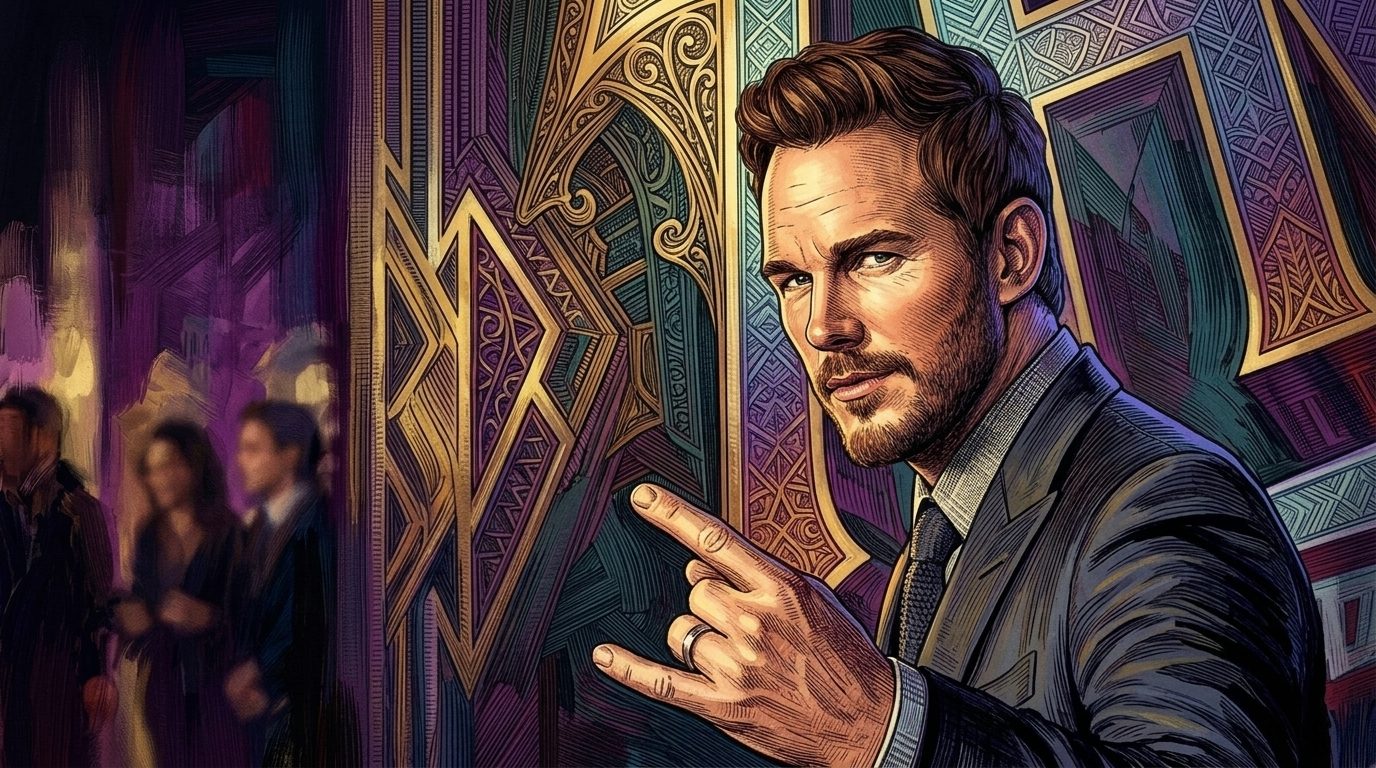
Stream it, and know exactly who it is for. Way of the Warrior Kid is a sincere, overstuffed motivational movie built for a ten-year-old who gets picked on at lunch and a parent patient enough to sit through the fifth-act bus crash to get there, and the film’s own numbers make the audience split plain: a 22% critics’ score from 18 reviews against roughly 84% from the people who actually watched it, a 62-point gap that is less a scandal than a category error. This was never built for the people who review it for a living.
The single choice that justifies the film is Jude Hill’s performance as Marc, the bullied nephew Chris Pratt’s Navy SEAL has been sent to toughen up. Hill, who played the boy in Belfast, has to swing between theatrical rage and total collapse inside a single scene, and the swing is what keeps Marc from reading as a lesson plan with a backpack. There is a small moment at his mother’s ice cream shop where he works up the nerve to ask a girl named Nora on a date, and his voice catches on the word itself: it is the one unarmored beat in a film that otherwise keeps its chin up at all times. It is also, not incidentally, the scene that makes the film’s best idea land. When Jake takes Marc on a night reconnaissance of the bully’s house and the boy discovers an alcoholic father instead of a villain worth punching, Jake’s response is not a lecture about hitting back but a line about people carrying more than they show, and RogerEbert.com’s Zachary Lee singles it out as the one stretch where the film becomes the thing it was reaching for all along.
There is no McG back catalog in this film’s DNA worth litigating, because the lineage that actually matters here is Willink’s own. Way of the Warrior Kid is adapted from Jocko Willink’s children’s novel, the first of a five-book series, which tells you the film was never pitched as cinema so much as a franchise starter kit with push-ups in it. Where this one lands is better understood against Pratt’s own recent run than against any director’s filmography. Mercy opened to 24% with critics and 81% with audiences before finishing at roughly $53.4 million worldwide on a reported $60 million budget and becoming a digital hit anyway. The Terminal List drew 58% from critics and 92% from audiences, closer to the split this film is chasing, and its second season just finished a four-year wait by dropping all eight episodes on Prime Video (worth checking against what else is actually worth your Prime queue this week). Pratt is building a specific audience one project at a time, and critics keep being the last people invited.
The craft complaint is the fair one, and it is worth taking seriously rather than waving off as critics being snobs about a kids’ movie. William Bibbiani at TheWrap puts it best: the film doesn’t have a training montage, because the whole movie is the montage, which is another way of saying nothing gets to breathe. Lee’s line lands harder still, that the film is “far too proud to take its own advice,” a story about patience that cuts away every ninety seconds like it is afraid of its own stillness. Variety’s Todd Gilchrist makes the related point that Pratt is simply too big a star to sit inside a kid’s story without pulling the camera toward his own flashbacks and his own damaged hand, and every cutaway to Jake’s war wound costs the film five minutes with Marc it cannot spare.
Judged purely as the movie it is trying to be, a motivational underdog story for the kid who needs one, it mostly works. The Hollywood Reporter’s Frank Scheck calls it “formulaic but effective,” and the formula is the point: a bullied boy, a hard-edged mentor, a plan with a name (Operation Warrior Kid), and an ending where discipline and empathy both get their due. The A.V. Club’s Andy Crump, no soft touch at a C-, concedes it “does the job as an adolescent-level movie built to reframe manhood in healthy, emotionally grounded terms,” which is a more generous read of its politics than the discourse around it suggests. The Guardian’s Owen Myers calling it “a Maga-funded after-school special” is a fair description of its texture, with its flag-adjacent soundtrack and shirtless pull-up montages, and a less fair description of its actual advice, since the climax has Marc choosing not to fight at all.
Who should bother: parents looking for ninety-six minutes that argue, loudly but without malice, for discipline, chores and physical courage, and kids who have been the smallest one in the hallway and would like to see that story end well (think of it as this year’s answer to the kind of patient-schedule streaming pick made for a family couch rather than a theater, the same logic behind skipping the multiplex for something gentler at home). Who should not: anyone expecting the sharper, more political film the Rotten Tomatoes split implies, and any adult watching alone, who will find the clothing-store montage before Marc’s first date genuinely interminable (there is only so much a grown person can be expected to enjoy watching a thirteen-year-old try on seven shirts).
The film preaches patience and then sprints through every lesson it has, Pratt’s star wattage keeps crowding out the boy whose story this is supposed to be, and the third act detonates into a bus crash with more spectacle than sense. It also tells a bullied kid, plainly, that the bully might be carrying something heavier than he is. Stream it for the kid in the house. Skip it if you are watching without one, unless watching a boy learn to do a proper pull-up is reason enough on its own.