
I Play Rocky earns the theater ticket, and the date printed on it is doing half the work. Peter Farrelly’s film about the three and a half days Sylvester Stallone spent writing the script he refused to sell without himself attached goes wide on Nov. 20, one day before the 50th anniversary of the original Rocky’s Nov. 21, 1976 release. Watch it alone and it is a pleasant, slightly soft biopic. Watch it with a room that already knows how the fight ends, and it becomes something closer to a reunion.
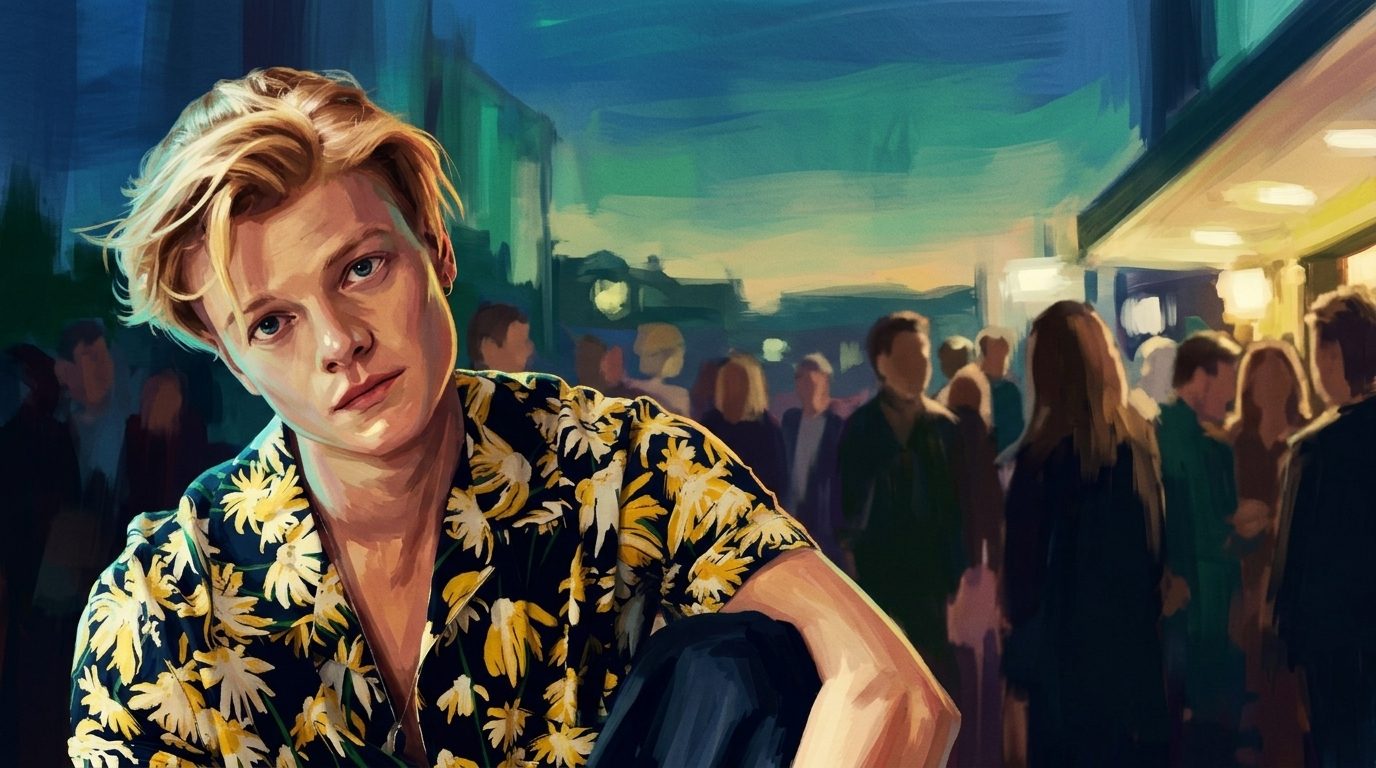
The one choice worth building a whole paragraph around is the casting of Anthony Ippolito, and specifically what the film asks his voice to do. Variety’s Owen Gleiberman described it as “a miraculous act of channeling”, the super-low growl and the molasses diction arriving intact, and the film is smart enough to lean on that voice for two full hours rather than treating it as a party trick that wears out by the second act. Ippolito was 27 when he was cast, known mostly for playing Al Pacino on The Offer, and he taped the audition that won him the part in his grandmother’s basement on Long Island. He then spent roughly eighteen months gaining 45 pounds of muscle while training at Gleason’s gym in Brooklyn to close the physical gap with his subject. Farrelly’s account of Stallone’s own reaction to the tape doubles as the best review the film has received: “This kid didn’t impersonate me. He became me.”
https://www.youtube.com/watch?v=V_g_Ut0jO-0
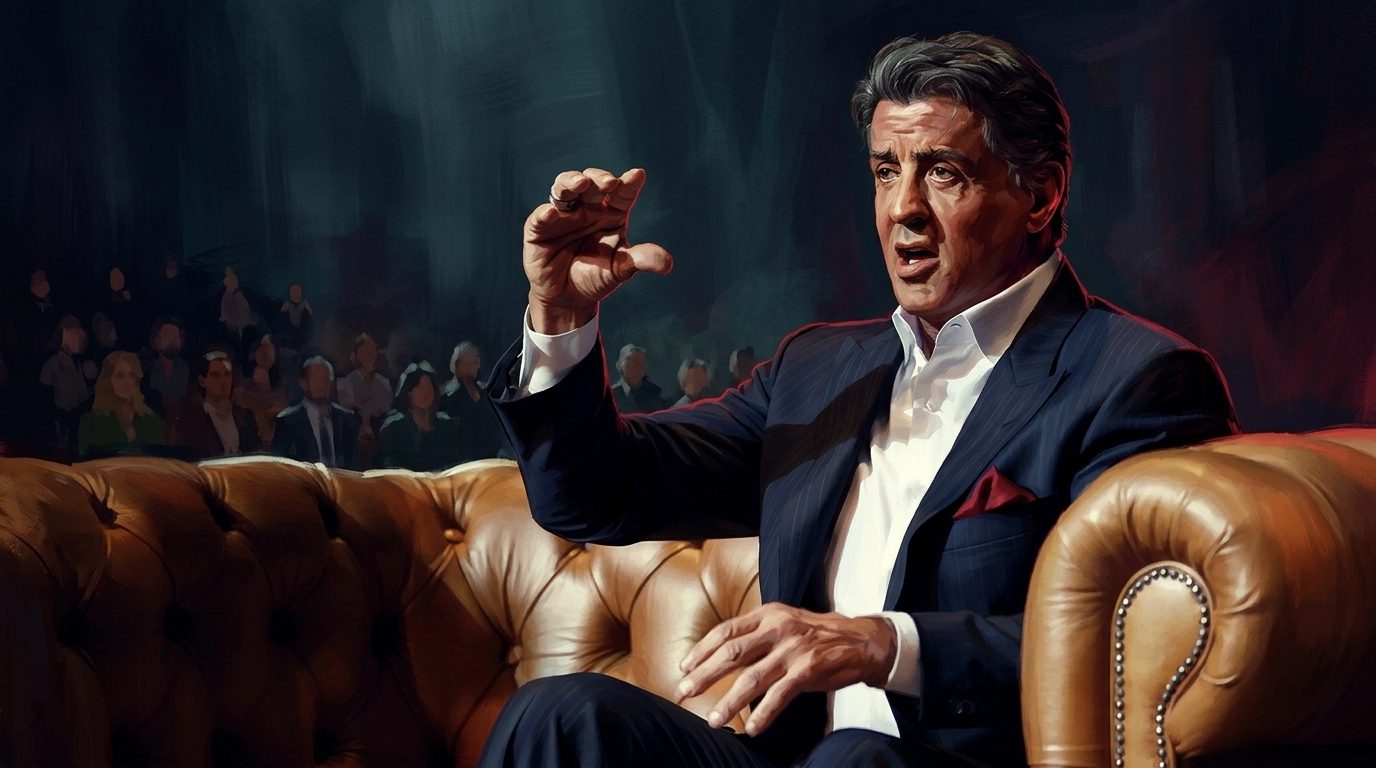
The film’s sharpest instinct is knowing when to stop performing and let history speak for itself. The staged final bout plays out under the end credits, and then the screen gives way to real December 1976 footage of Johnny Carson introducing the newly minted star on The Tonight Show. Carson’s line to the audience that night, that nobody would believe a movie made about the making of Rocky, lands fifty years later as the punchline the whole picture has been circling. It is a clever way to let the subject outscore his own impersonator.
Farrelly’s résumé has always resisted a tidy through-line, running from Dumb and Dumber through the sentimental pivot of Green Book, and this one sits comfortably alongside the latter: warmer than it is sharp, more interested in affection than in friction. Critics kept reaching for comparisons to Day for Night and Ed Wood, films about the making of other films, and the comparison is fair in subject if not in rigor. The Hollywood Reporter’s David Rooney called it “a big-hearted movie about moviemaking, if not an artful one,” which is as precise a summary as the film is likely to get.
The reception splits along a predictable line. I Play Rocky sits at 88% fresh from 113 reviews, with a consensus calling it a feel-good celebration of the underdog who created one of cinema’s great underdogs. Deadline’s Pete Hammond went further still, reaching for Truffaut’s Day for Night by way of comparison. TheWrap’s Chase Hutchinson pushed back, arguing the only blows it lands come from punching itself in the face by spelling out everything it should be trusting the audience to feel. Both reviews are describing the same film accurately, which says something about how close the picture sits to the line between heartfelt and overcooked.
Around Ippolito, the supporting cast does sturdier work than the screenplay strictly requires. Tracy Letts plays Sandy Maddox, the United Artists executive who keeps raising his offer for the script, a fictional composite of several real studio men of the era, and he gets the only genuinely funny scenes in the picture. AnnaSophia Robb gives Sasha a spikiness the writing mostly wants to sand off. Matt Dillon, as the father, finds the flop sweat in a man who never figured out how to be proud of his son.
The numbers behind the legend carry the film’s spine. Stallone wrote the first draft longhand in three and a half days after watching the Ali-Wepner fight, and the producers’ offer to simply buy the script and cast someone else climbed to $360,000, an absurd sum for an unproduced writer in 1975. He turned it down for $20,000 and $350 a week to star in it himself. The film stages that refusal as the closest thing it has to a climax, and it mostly earns the moment.
There is an oddity the picture cannot resolve, and to its credit does not pretend to. Stallone holds no official credit on the film and said he was blindsided, with “zero to do with it”, while Farrelly insists at length that he would never have made the movie without Stallone’s blessing, right down to a phone call where Stallone reminded him, “You told me to separate.” Whether that separation was Stallone’s idea, Farrelly’s idea, or a story the two men have quietly agreed to tell differently, nobody outside the room can say. The film is generous enough, and modest enough, to survive the ambiguity.
Anyone with a low tolerance for Hollywood congratulating itself on how plucky it used to be should sit this one out, kindly. So should anyone hoping for the rougher edges the real Stallone has acknowledged, since the dog, the softcore years and the general ugliness of being nobody each get roughly a scene apiece before the film moves on. What remains is a picture that tells the audience exactly what it is going to do and then does it competently enough that the announcement stops mattering.
See it in a theater, ideally on the anniversary weekend, with a crowd that showed up already rooting for a fight it has watched a hundred times. The qualification is built into the premise: this is a film about believing in yourself when nobody else will, made by a studio and a star who still cannot quite agree on who gets credit for believing first.